Phone: (917)768-8533
Address: 6753 Jones Mill Court, Suite F, Peachtree Corners, GA 30092,USA

This is an interactive guide to a solution framework for **Intent-Driven Agentic AI Energy Management**. This approach transforms how telecommunication networks reduce energy consumption. Use the navigation on the left to explore the core concepts of this transformative solution.
Traditional energy-saving methods are often static and rule-based, failing to cope with the dynamic complexity of modern 5G/6G networks. This solution leverages **Agentic AI**—a collection of autonomous, goal-oriented AI agents—that interpret high-level human "intents" (e.g., "reduce energy use by 20% in the city center") and autonomously execute complex, multi-step strategies to achieve them without compromising network performance. This approach moves beyond simple automation to full operational autonomy, unlocking significant OPEX savings and advancing sustainability goals.
The telecommunications industry faces a critical and complex energy challenge. This section outlines the key problems this solution is designed to solve. Click on each challenge to see the details.
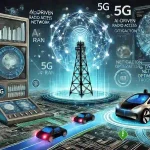
The Radio Access Network (RAN) is the most power-hungry segment, accounting for the vast majority of energy use.
RAN accounts for 70-80% of total network energy consumption.
Static rules and manual configurations are no longer effective. Click each item below to learn more.
Network traffic is highly dynamic and unpredictable. Energy-saving features (like cell sleep modes) must be applied intelligently, second-by-second, to avoid impacting user experience.
Manual configuration and static, rule-based scripts (e.g., "turn off cells from 2 AM to 5 AM") are inefficient. They either don't save enough energy or degrade network quality during unexpected traffic spikes.
The data centers and edge-cloud infrastructure supporting the RAN also consume vast amounts of power for compute, storage, and cooling.
This solution is built on two core concepts: **Intent-Based Networking (IBN)** and **Agentic AI**. This interactive diagram shows how the components are structured, from the high-level "Planner" agent to the specialized "Doer" agents.
States a high-level, natural-language goal.
Receives the intent. Its job is to *perceive, reason, and plan*—decomposing the goal into smaller, actionable tasks.
Monitors cell load and RF conditions. Activates/deactivates carriers and manages cell sleep modes.
Monitors server CPU, PUE, and cooling. Migrates workloads and scales compute resources.
The "watchdog." Constantly monitors performance. Alerts the Orchestrator if constraints are breached.
This framework operates in a continuous, closed-loop cycle. Click through the steps below to see how the system responds to a real-world intent and adapts to changing network conditions.
Operator Intent:
"Minimize energy use in the downtown sector tonight without impacting video streaming quality."
By moving from static rules to autonomous, intent-driven operations, this solution delivers significant and measurable advantages across the organization.
Autonomously optimizes the single biggest driver of network operational cost (energy), far more effectively than static methods.
Moves beyond just saving energy. The "intent" paradigm allows operators to *balance* savings with performance and quality of experience.
Frees human engineers from complex, low-level configuration tasks to focus on high-level strategy. The system handles the "how."
Automatically learns and adapts to new equipment, new traffic patterns, and changing business goals without needing manual reprogramming.
Provides a direct, measurable, and effective tool for achieving corporate ESG (Environmental, Social, and Governance) targets.